After the seven unpeated French single malt whiskies reviewed on Friday, we continue exploring French whisky, but this time with seven peated French whiskies. On the menu, the Naguelann Start, bottled for the Malt in France French whisky show 2025, Fontagard TORB 9121-1, La Piautre d’Eire et d’Alba, the Kornog Single Malt and Santez Erwann 2025, the Vilanova Shed Signature #1 and the Armorik Yeun Elez Jobic single malt.
Naguelann Start (2025) Review
Naguelann Start is a three-year-old Breton single malt bottled at 63.1% ABV in a 70 cl format. It was bottled on the 25th of March 2025, shortly before Malt in France’s second edition in Rennes on 5–6 April 2025.
The event organiser announced both a special Naguelann selection for Malt in France and the distillery’s first cask-strength whisky made from 100% Naguelann production. The timing, age and strength strongly identify this [Start] release as that inaugural bottling, although the accessible announcement does not publish its exact cask number or technical recipe but, as I am from the Malt in France organisation team, I can tell it was from a third fill red wine cask, which we discovered after selecting this whisky blind among other samples sent to us.
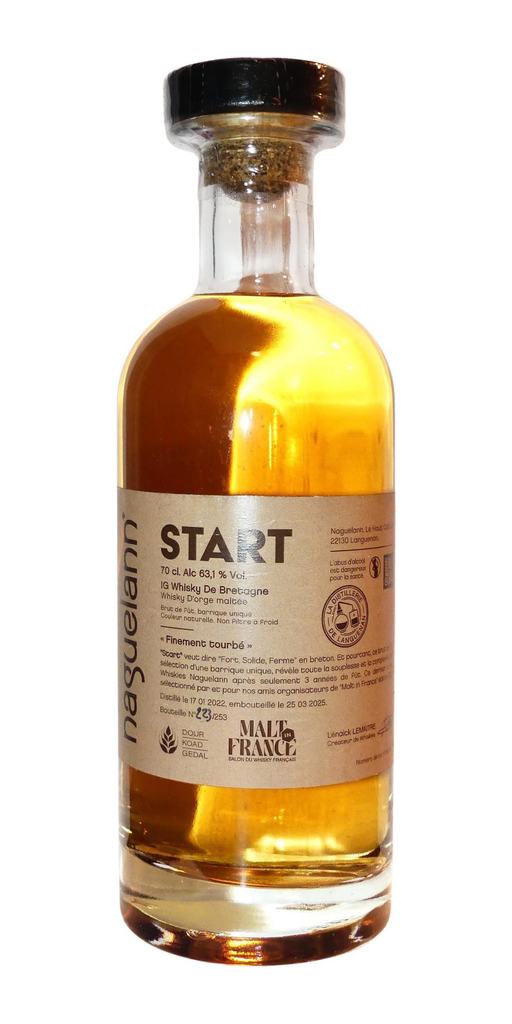
Colour:
Jonquille.
Nose:
Neat: The nose starts (hum) on concentrated malt, cereal and fermentation-driven fruit; green and red apples, grape skin and restrained red berries; vanilla, dry spice and a still quite noticeable vinous undertone, despite the cask being a third fill wine cask. The peat is light and soft, in the background.
With water: Apples, smoked pears and malt open first, followed by subtler cherry, plum skin, dried flowers and old French oak.
Palate:
Neat: The palate is powerful and oily, led by malt, cereal paste and pepper, then tart red fruit, apple skin and some wine acidity. Dry smoky peat and grape must, plum pie and a good pinch of pepper. The alcohol is quite present but not burning.
With water: The palate becomes sweeter at first, and the mouthfeel becomes jammy, with strawberry and chilli jam, then a good amount of French oak bitterness.
Finish:
Long, warming and cereal-led, with pepper, apple skin, dry red fruit and a restrained wine-tannin grip.
Comments:
I must admit that when the Malt in France tasting panel blind tasted seven cask samples to select the 2025 edition’s bottling, we almost unanimously selected this Naguelann (and a friend and me really thought it was a Kornog!), as it was by far the best out of the seven samples. But when the final bottling was released and we made people try it on the show, I have to confess I was a bit disappointed and didn’t like it as much as the first time. Eighteen months later, I haven’t gone far in my bottle, and it will probably gain from aeration and the level going down, and I think it’s already better than the first pour from a fresh bottle. But even as a third fill, the wine is a bit too present for my own taste.
Rating: 6/10
Fontagard TORB 9121-1 (2024) Review
Next, we have the poetically named TORB 9121-1, produced by Distillerie de Fontagard in Neuillac, Charente-Maritime. The first maturation takes place in new French-oak casks toasted to Char 3. The whisky is then transferred into old Cognac casks. It is a lightly peated rather than heavily medicinal style. It was distilled over 2019–2020 from a 2019 harvest of 6RH barley, and bottled in 2024, at 45% ABV, without chill filtration (there is no mention regarding the colour). Its retail price is around €60 for a 70 cl bottle.
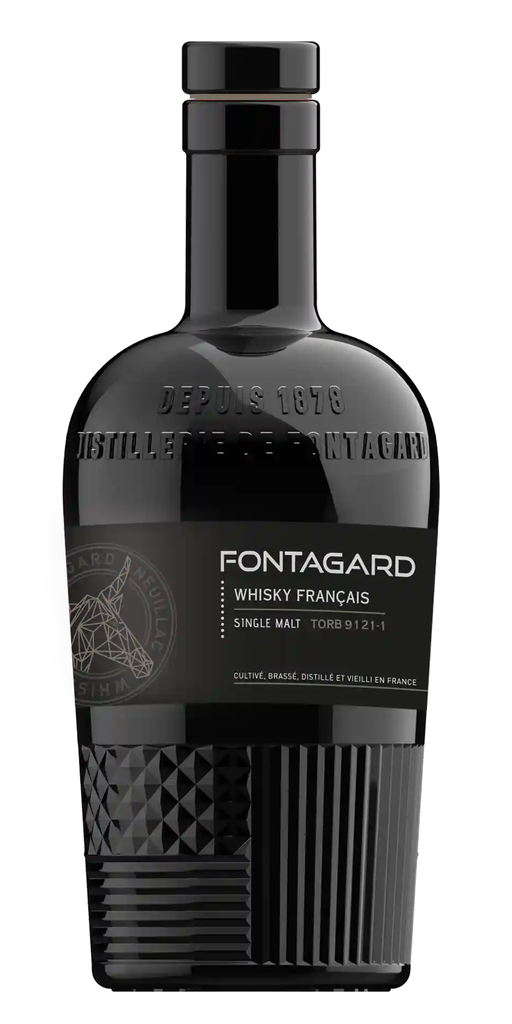
Colour:
Old gold.
Nose:
Neat: A light, clean vegetal peat arrives first, like fresh smoke, fig leaves and a distant fireplace. Green wood, lightly burnt oak and flint follow, giving it a dry, fresh, slightly farmyard and mineral character. Vanilla and liquorice give sweet notes, with dry fruit – particularly figs and sultanas – plus lemon zest and crisp red apple developing after time in the glass.
Palate:
Neat: The arrival is lively, with a soft but definite smoky edge. Roasted oak, light ash, pepper, liquorice and flint sit around malted grain, red apple and faint stone fruit. The peat is more pronounced on the palate than on the nose, although it remains clearly in the lightly peated category. The Char 3 new oak contributes empyreumatic flavours – charred wood, toast and a suggestion of roasted wine-cask tannin – while the old Cognac cask adds a bit of roundness and prevents the whisky from becoming sharply woody.
Finish:
Flint, liquorice, leather, fresh oak and lightly charred wood persist, with residual vanilla and sweet fruit.
Comments:
A really nice, lightly peated whisky, soft and showing a nice complexity for its young age. It is a modern French peated whisky that prioritises aromatic freshness and cask-driven spice over dense tar and phenols, or maritime peat, but we have other great distilleries for that profile, right?
Rating: 6.5/10
La Piautre D’Eire et d’Alba (2025) Review
D’Eire et d’Alba is a limited release from La Piautre, but with several batches already released. All bottled in 50 cl format at 54.5% ABV. My bottle mentions a distillation in April 2021 and a bottling in May 2025, making it four years old. It is an assemblage of La Piautre whiskies matured in French-oak casks, then finished for four months in a cask previously used for peated whisky from the Hebrides. ‘D’Eire et d’Alba’ refers to Ireland and Scotland, a fitting name for a French whisky whose peat profile is reinforced by a Hebridean whisky cask. The bottling is described as organic and 100% malted barley, with peat sourced from Ireland.
La Piautre is a farm-scale producer in La Ménitré, Anjou, integrating floor malting, brewing, distilling (with naked wood flame) and maturation on one site. It germinates barley on the floor and uses two Charentais stills, giving this release a strong local cereal identity beneath the acquired smoky influence.
Current French availability appears limited but still available in the low €60 a bottle. I found no dependable indication of artificial colouring or chill filtration for this La Piautre whisky.
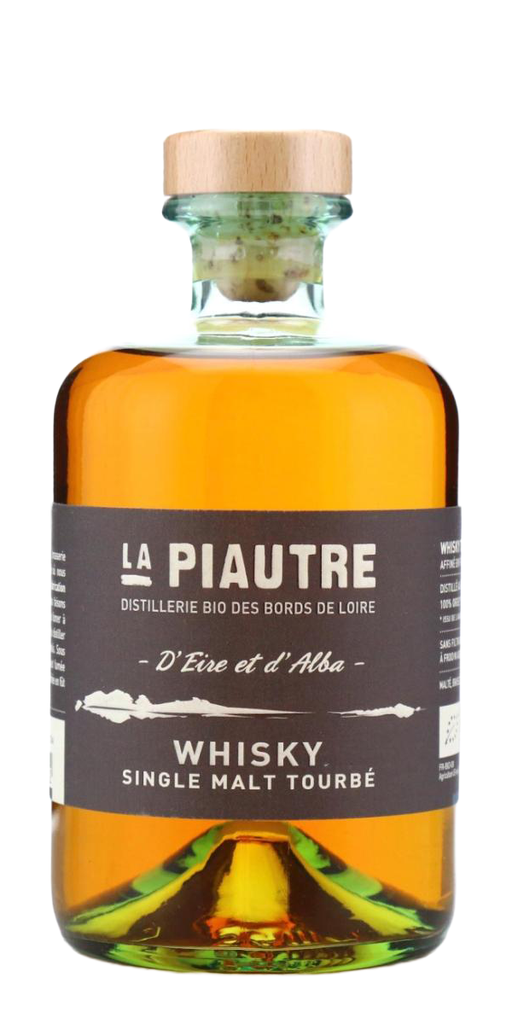
Colour:
Russet.
Nose:
Neat: Expressive, intense peat comes first, with cold smoke and barbecue ash. Maritime iodine, coastal air and mineral smoke are balanced by a clean malt core. Behind the smoke are dried herbs, damp mineral earth and a faint floral-grassy freshness.
With water: Reduction reveals toasted wood and malt, rye and barbecued orange peels with dried herbs.
Palate:
Neat: The attack is notably soft and rounded for the strength, beginning with rich malt and an oily, gentle sweetness before the peat expands. Smoke remains controlled, and the middle palate combines earthy peat, iodine and a dry mineral backbone. The Hebridean cask influence lends, once again, a coastal accent.
With water: The palate features chalky chocolate, dry smoke and ashes, with heavily toasted wood and hints of lemon.
Finish:
Long, clean and increasingly saline, with a restrained return of cool smoke, iodine and mineral dryness.
Comments:
This La Piautre D’Eire et d’Alba is intense but with controlled peat, iodine and cold smoke over a soft, malt-forward palate, ending saline and mineral. Despite its young age, it shows a nice complexity and does not scream ‘young whisky hidden behind overactive wood’, and the Hebridean cask finish is there to provide a well-integrated additional coastal character without hiding the La Piautre distillate character. One complaint, though: the bottle’s short neck, getting larger at the stopper: you really need to have the right movement when pouring; otherwise you’re sure to spill some whisky.
Rating: 7/10
Kornog Single Malt (2025) Review
Kornog is made at Celtic Whisky Distillerie in Pleubian on Brittany’s northern coast, the same producer behind the unpeated Glann Ar Mor range. ‘Kornog’ is Breton for ‘west,’ and the whisky is intended as the peated counterpart to Glann Ar Mor’s maritime, direct-fired house style.
The core bottling is an NAS, 70 cl single malt at 46% ABV, made from malted barley peated to roughly 50 ppm and matured fully in ex-bourbon casks. It is presented at natural colour and without chill filtration. Current pricing varies by market, but specialist European listings cluster around €60–75; no fixed age statement or meaningful bottle-count limit applies to the regular 46% expression.
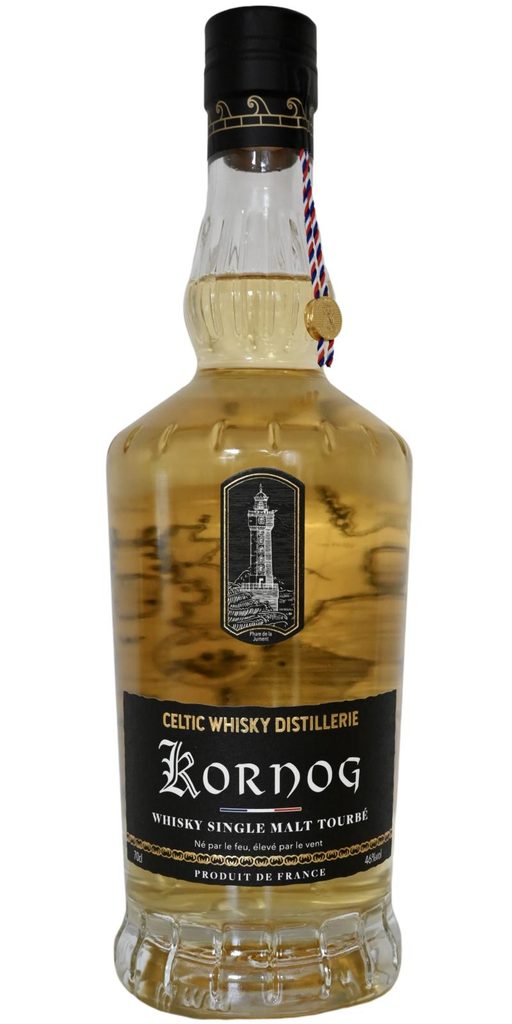
Colour:
Pale straw.
Nose:
Neat: The nose is initially maritime and mineral: iodine, sea air, algae, wet stones and clean, bright smoke. Lemon zest and grilled lemon are joined by beeswax, vanilla and a light honeyed sweetness. But the fruit component is unusually prominent for a peated malt. Green apple, pear, pineapple, passion fruit, mandarin and melon develop after a few minutes, giving the whisky a fresh profile.
Palate:
Neat: The texture is oily, delivering a firm core of chewy, grassy malt. Peat is clear and quite powerful, but it is balanced by vanilla, apple, orange, pineapple and white fruit. Ginger, white pepper, liquorice and toasted cereal provide the main spice structure. Salt, brine, limestone and wet-rock minerality reinforce the coastal theme, while smoke can move between cool hearth ash and a slightly earthy and rooty peat.
Finish:
Long, smoky and saline, with peat smoke, ash, seaweed, lemon, green olives and sea water lingering alongside vanilla, black pepper and sweet citrus.
Comments:
This Kornog peated single malt is among the best French peated whiskies, and probably the best core range one. And this might stay like this for some time, until some distilleries, or even the Celtic Whisky Distillerie themselves, add an older peated whisky to their core range. But in the meantime, this Kornog stays on top of the peated core expressions.
Rating: 7.5/10
Vilanova Shed Signature #1 (2024) Review
We make a detour back through Distillerie Castan, as we mentioned on Friday, to try the Shed Signature #1. It is a 70 cl, 48% ABV small-batch single malt made from organic, peat-dried barley. The whisky is initially matured in a mix of six ex-bourbon casks and one French-oak ex-white-wine cask, then finished in casks previously used to mature peated Islay whisky. The 48% strength, named Signature Tourbée #1, distinguishes it from Vilanova Argile, the distillery’s regular 46% peated malt matured in white-wine casks. The shed has been sold at €79.90 directly by Castan, though it is sometimes listed for around €70 elsewhere. It features neither an age statement, total bottle count, nor an exact peat level.
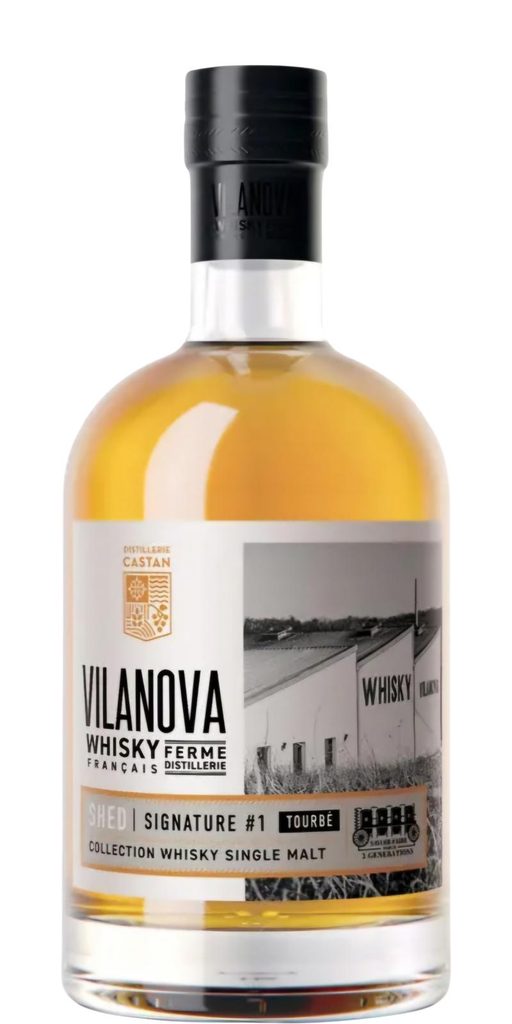
Colour:
Yellow gold.
Nose:
Neat: The nose is lightly peated, less than I was expecting. After some aeration the smoke is slightly stronger, enveloping apricots, toasted malt covered in honey, peaches and pears, and some melon. There are hints of coastal notes and iodine coming from the ex-Islay cask finish, nicely integrated, but soft again.
Palate:
Neat: If the nose lacks intensity, fortunately, the palate shows more of it. It starts really grassy with gentian, ivy and verbena, before some sweet malt and yellow fruits arrive (pears and peaches again, apricots). The peat is vegetal more than maritime, showing more of the malt’s influence than the ex-Islay cask finish.
Finish:
The finish is medium long, with more of those gentian and verbena, lacquered wood, a touch of mandarin (fruit and peel), with some seawater and seashells.
Comments:
If the Vilanova Roja was clearly not to my taste and unbalanced, this Shed Signature #1 is another story. We have here a lovely lightly peated French single malt, a little shy on the nose but less so on the palate, and with a nice mix of herbal, coastal and smoky notes. The ABV makes it quite easy to drink as well. I’m glad I bought a bottle at Malt in France last year.
Rating: 7/10
Kornog Sant Erwan 2025 Review
Sant Erwan – Breton for Saint Yves – is Celtic Whisky Distillerie’s annual tribute to Brittany’s patron saint. The 2025 release is distilled at the Pleubian-based distillery on the north Brittany coast and drawn from one ex-bourbon cask, where it matured for five years under maritime conditions.
The 70 cl whisky is peated and bottled at 50% ABV after a slow reduction, rather than released at natural cask strength. The outturn is 270 numbered bottles, presented in a canister, with a recommended French retail price of €124.
No cask number, peat specification, barley variety, exact maturation dates, colouring declarations or filtration statement is publicly available for the 2025 bottling. It should not be confused with previous Sant Erwan vintages: these annual single-cask releases can vary substantially in strength, age, wood influence and peat expression.
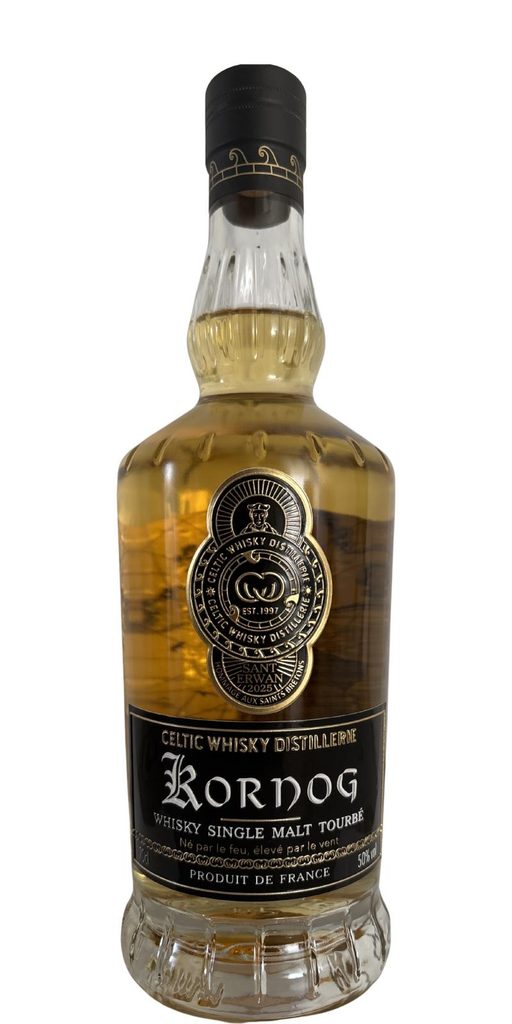
Colour:
Pale straw.
Nose:
Neat: The nose starts with honey, vanilla, lemon and pepper, with a medium intensity. The nose is maritime and a bit smoke forward, with medium earthy peat, cold ash, burnt wood and dried seaweed before heather honey, ripe pear and liquorice emerge. Then, in the background, are some floral notes, potpourri, and some sweet melons.
With water: The nose becomes kind of shy, but shows candied lemons in sea water and still those cold ashes.
Palate:
Neat: The palate is way more intense and peaty than the nose led to expect. Vanilla is woven through fresh peat, with spice providing structure and a little bit of heat. Herbaceous notes and toasted bread cereal lead to more overt peat: damp earth, maritime bonfire smoke, creamy honey, yellow fruits (many lemons, apricots and hints of peaches and plums) and bourbon vanilla, strengthened by a large saline minerality and some liquorice wood.
With water: Reduction brings toasted oak, lemon albedo and freshly cut grass. And litres of freshly squeezed lemon juice.
Finish:
The finish is long, with saline peat and lingering dry smoke, pepper, yellow fruits, honey, toasted oak, citrus peel and albedo, and liquorice.
Comments:
This Kornog Sant Erwan 2025 is like their classic peated single malt, with a slightly shier nose, but a splendid more intense palate, clean, pure, and chiselled. It is a bit expensive for a five-year-old single cask, but Celtic Whisky Distillerie only produces 20 to 30,000 bottles a year.
Rating: 8/10
Yeun Elez Jobic (2020) Review
Launched in September 2020, Yeun Elez Jobic takes its name from the Yeun Elez peat bog in the Monts d’Arrée, a landscape associated in Breton folklore with the ‘Gateway to Hell’. The ‘Jobic’ designation distinguishes this core 46% expression from Warenghem’s stronger, more limited Yeun Elez single cask bottlings. Warenghem makes it in Lannion, Brittany, from Scottish malt peated to 50 ppm, using its own spring water and traditional pot stills. The standard Jobic bottling is 70 cl at 46% ABV and has no stated age. As far as I know, its spirit is matured for an average of roughly four years in well-used bourbon casks – casks that had previously held at least three Armorik whiskies – to reduce overt oak influence and keep the peat-and-distillate character exposed. We’re reviewing the first edition, but I think there have been other batches since. Expect to pay a little more than €60 in France, from €46 in Europe, and £56 in the UK. Oh, and this is bottled without chill filtration nor added colour.
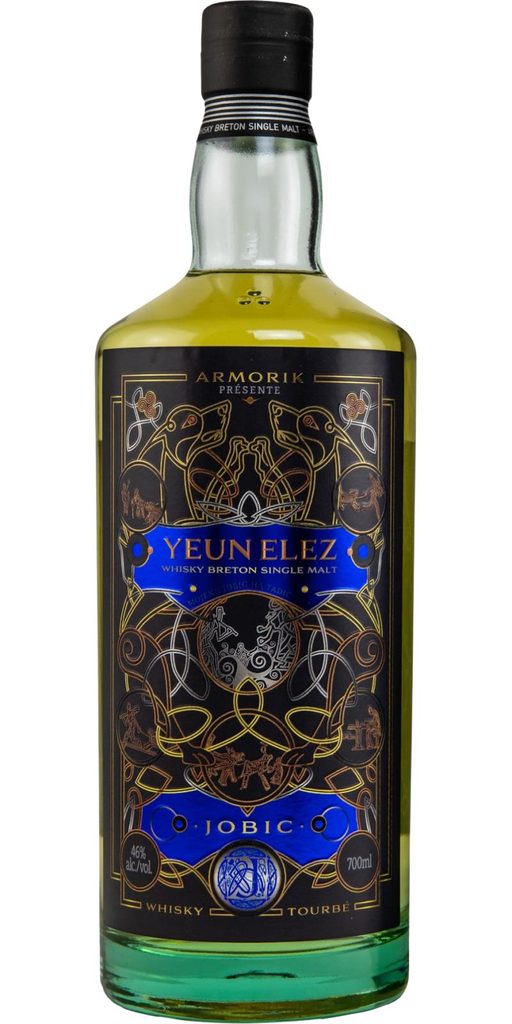
Colour:
White wine.
Nose:
Neat: A medicinal but aromatic peat opens first: camphor, cloves, faint antiseptic notes and light smoke. This is balanced by surprisingly rounded fruit – ripe banana, white peach, pear drops, some lemon and hints of plum – plus pastry cream, vanilla and malted cereal. These are joined by light coastal notes, also with hints of olive brine and a couple of rubber bands.
Palate:
Neat: Smoke coats the palate immediately, but the whisky is rounded rather than harsh. Bright citrus – lemon zest and grapefruit-like bitterness – brings freshness, alongside cereal, toasted bread and a lightly oily texture. The peat is herbal, cool and gently earthy, moving through iodine, anise, liquorice and faint ash. Pepper builds gradually, while a small saline note gives the palate a coastal feel.
Finish:
Persistent, iodised and spicy, with wood-fire smoke, cloves, pepper and lingering lemon. The finish becomes gently drying and salty, retaining cool ash and herbal peat.
Comments:
My appreciation of the Armorik Yeun Elez Jobic is a bit strange and undecided. Some days I just love it and find it a resemblance with a young Caol Ila. Some other days I’m less convinced, find this Yeun Elez good but still too young. Fortunately, the rating interval stays reasonable: in a bad day, I’d dock just half a point. But today is a good day. I really like this young peated Breton whisky.