From XO and Grande Champagne to Lot 75, vintage Cognacs and brut de fût: how much can we really learn from a bottle?
Independent (and sometimes official) Scotch whisky labels can be remarkably informative. Distillation dates, cask numbers, wood types, outturns, bottling strengths… sometimes there is so much information that you almost need a magnifying glass.
Cognac labels can be a rather different experience.
One bottle proudly announces that it is an XO. Another says Hors d’Âge. A third gives us a precise vintage, while another simply says Lot 75. Some mention Grande Champagne, others Fine Champagne. One is bottled at 40%, another at 54%, and both may contain eaux-de-vie that have spent decades in oak.
And somehow we’re supposed to compare them.
The problem isn’t that Cognac labels tell us nothing. They can tell us quite a lot. It’s that what they guarantee, what they suggest and what we assume they mean are three different things.
So let’s decode them.

First, Cognac is already a guarantee of origin.
Before looking at the fancy words, we should probably start with the most important one.
Cognac.
Unlike brandy, which can be produced in many places using various methods, Cognac is a protected geographical indication governed by detailed production requirements.
It must originate within the delimited Cognac area and comply with the appellation’s rules concerning grape varieties, wine production, distillation, maturation and other aspects of production.
So the word Cognac itself establishes rather more than a simple indication of the raw material. But it doesn’t tell us which estate grew the grapes, who distilled the wine, who matured the resulting eau-de-vie, or who eventually bottled it. And those distinctions become important when we start reading the rest of the label.
If you need a refresher on the production process, I’ve covered it extensively in my earlier article, What Is Cognac?
Here, we’re interested in what happens when all that production history has to fit onto a bottle.
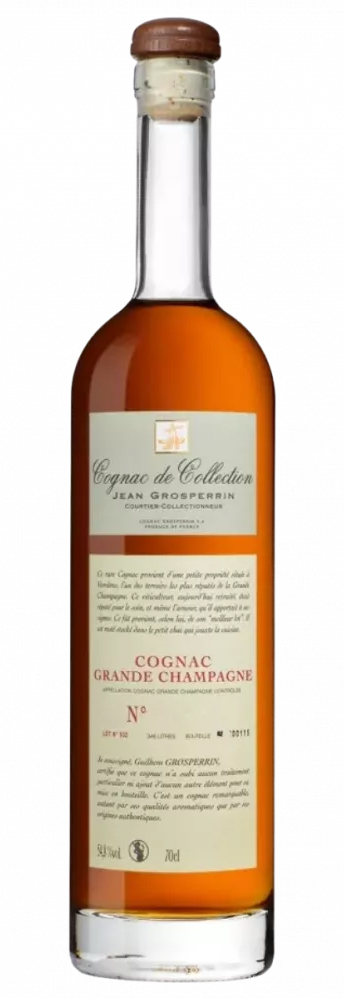
Grande Champagne doesn’t mean Champagne
Let’s get this out of the way immediately.
Grande Champagne Cognac has nothing to do with sparkling Champagne wine.
The Cognac region is divided into six crus:
- Grande Champagne
- Petite Champagne
- Borderies
- Fins Bois
- Bons Bois
- Bois Ordinaires, also called Bois à Terroirs
These are geographical designations, not age categories or independent quality grades.
If a Cognac is labelled Grande Champagne, the designation establishes the geographical origin of the eaux-de-vie. It doesn’t mean the Cognac is necessarily older, better, more complex or more expensive than something from Fins Bois. There are traditional descriptions of the characteristics associated with different crus, and terroir certainly matters.
But terroir isn’t a tasting score.
A magnificent Fins Bois Cognac doesn’t suddenly become inferior because another bottle says Grande Champagne. I have tasted enough old Cognacs to be particularly suspicious of that assumption.
Fine Champagne is something else again
Here’s a phrase that sounds even more prestigious.
Fine Champagne Cognac.
Surely that must mean an especially fine Grande Champagne?
Not quite.
Fine Champagne is a protected designation for a blend of eaux-de-vie from Grande Champagne and Petite Champagne, with at least 50% coming from Grande Champagne. So, somewhat counter-intuitively, a Fine Champagne Cognac is not necessarily made entirely from Grande Champagne eaux-de-vie.
It is a geographically defined blend.
And the word Fine shouldn’t be read as a legal promise that it tastes better. This is a recurring problem with Cognac terminology. Some of the words sound like quality judgements. But legally, they may be describing something much more specific.
VS, VSOP and XO: the youngest eau-de-vie wins
Now for the age designations.
These are probably the best-known pieces of Cognac vocabulary.
And they’re also among the most misunderstood.
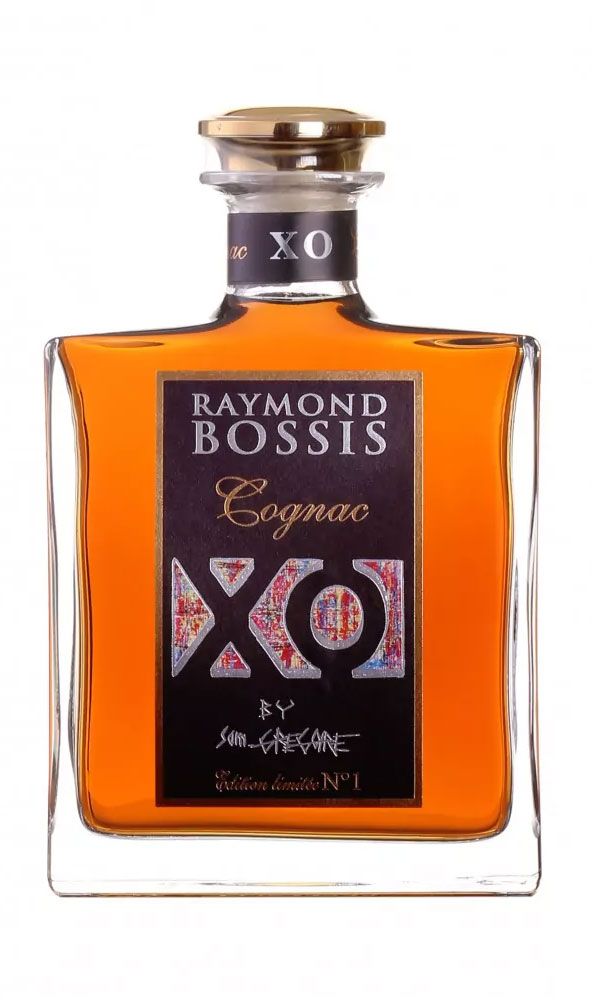
A Cognac labelled XO must contain eaux-de-vie that satisfy the minimum ageing requirement for XO.
But the label doesn’t tell us the average age of the blend. Nor does it tell us the age of its oldest component. The age designation is determined by the youngest eau-de-vie.
The main minimums are:
| Designation | Minimum age |
|---|---|
| VS / Three Stars | 2 years |
| VSOP | 4 years |
| Napoléon | 6 years |
| XO | 10 years |
| XXO | 14 years |
Other traditional expressions, including Réserve, Vieux, Extra and Hors d’Âge, have also defined positions within the Cognac age-designation system.
That last point is important.
Hors d’Âge doesn’t mean that the Cognac is legally beyond age classification.
It belongs to the same minimum-age framework as XO.
In practice, a producer may use the designation for eaux-de-vie much older than the minimum. But that’s a commercial and production choice, not a different legal minimum.
Your XO could be much older than ten years.
Let’s imagine two XO Cognacs.
The first contains eaux-de-vie aged between ten and fifteen years.
The second contains eaux-de-vie aged between twenty and fifty years.
Both can be sold as XO. And both can be perfectly legitimate. The label gives us the minimum age category, not a detailed breakdown of the blend.
A producer might disclose an approximate average age or describe the ages of the components. That’s useful additional information.
But it is not what the two letters XO themselves guarantee.
This is also why comparing two XO Cognacs solely on their designation is rather like comparing two whiskies simply because both say Single Malt.
The category is meaningful. It just doesn’t tell the whole story.
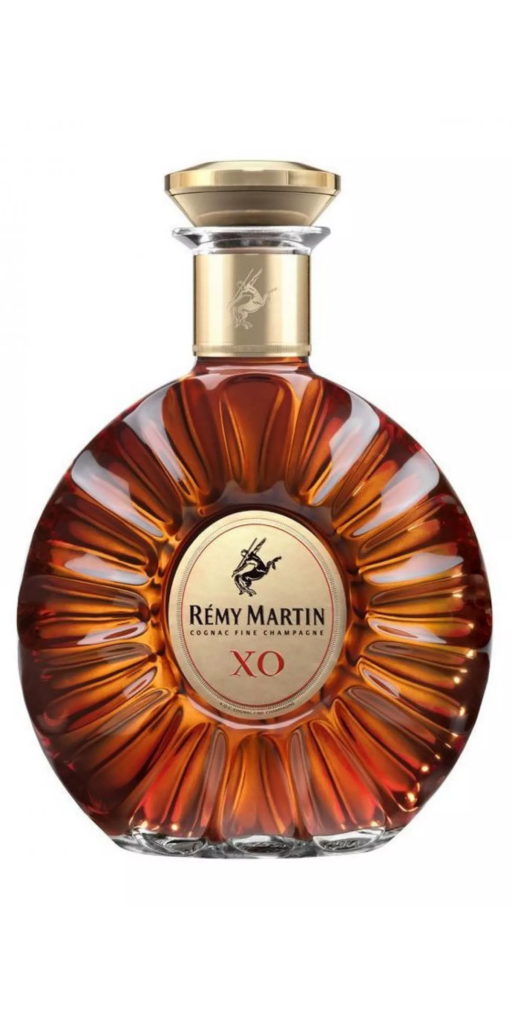
Napoléon, Extra and Hors d’Âge aren’t just decorative words.
Cognac has accumulated a remarkable vocabulary of age-related expressions.
- Napoléon.
- Très Vieux.
- Vieille Réserve.
- Extra.
- Hors d’Âge.
- Ancestral.
Some sound more impressive than others.
And some are considerably more familiar to whisky drinkers than others. But these terms should not all be dismissed as unregulated marketing language.
Several are recognised age designations with specific minimum requirements. That doesn’t mean they tell us precisely how old the Cognac is.
It means we need to distinguish between the legal minimum associated with the expression and the actual age of the eaux-de-vie used by the producer.
An Extra may contain much older Cognac than an XO. But the word Extra alone doesn’t establish a specific 30-, 40- or 50-year age.
As usual, the temptation is to read more into the label than it actually says.
A vintage is much more specific.
Now things become interesting.
Consider a bottle labelled:
Cognac 1994
When presented as a genuine vintage claim, this is different from an XO designation.
It identifies a particular production year rather than a minimum age category.
Vintage Cognac is subject to specific traceability and control requirements because the producer must be able to substantiate the vintage.
But here’s something worth remembering:
A vintage is not automatically an age statement.
To establish the duration of oak maturation, we also need to know when the eau-de-vie was removed from oak, or have equivalent reliable information about its maturation history.

Imagine an eau-de-vie distilled in 1994.
It matures in oak until 2014.
Then it is transferred to a glass demijohn.
Finally, it is bottled in 2024.
The Cognac has a 1994 vintage.
It was bottled thirty years after its distillation year.
But it did not spend thirty years maturing in oak.
It spent approximately twenty.
Those are different facts.
And with very old Cognac, that distinction can become extremely important.
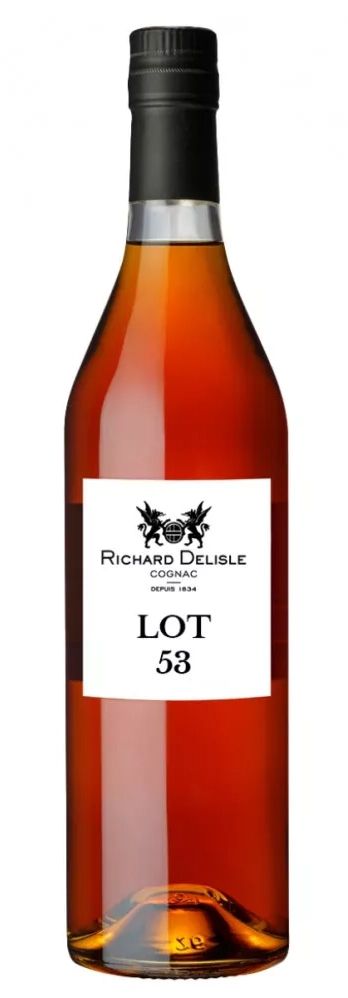
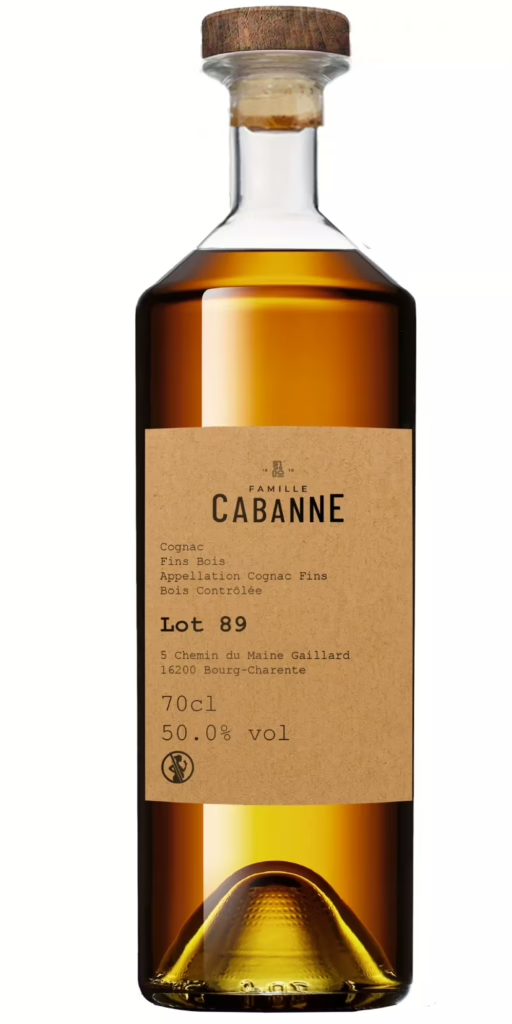
And then there’s the mysterious Lot number.
If you’ve explored independent Cognac bottlers, you’ve almost certainly encountered labels such as:
Lot 75
Lot 53
Lot 24
And you may already have mentally translated those into 1975, 1953 and 1924.
Sometimes that interpretation is correct. But the word Lot is not, by itself, a regulated vintage declaration.
A lot identifier is fundamentally a means of identifying a production or bottling batch.
Some specialist Cognac producers use numbered lots to communicate an approximate or documented historical origin.
Others may use their own internal conventions. Like Mauxion, which seems to indicate an age instead of a vintage (which is quite confusing).
And the mere appearance of two digits after the word Lot doesn’t legally establish a distillation year.
That means the same principle we used when investigating undisclosed Scotch whisky applies here:
Separate what the label actually establishes from what the trade convention suggests.
If the producer explicitly confirms that Lot 53 refers to an eau-de-vie distilled in 1953, we have meaningful information.
If a retailer simply assumes it means 1953 because that’s how other producers use similar labels, we should be more cautious.
The convention may be useful.
It isn’t a substitute for provenance.
Famille Cabanne Lot 24 : when the producer tells us more
The Famille Cabanne Lot 24 is a particularly interesting example.
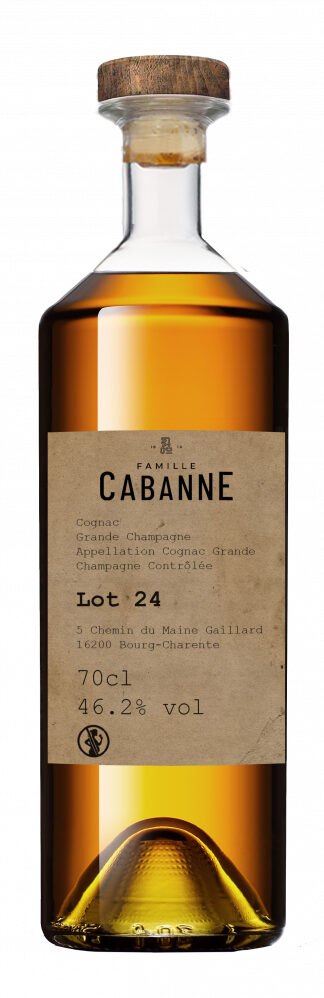
Here, the producer’s information establishes that the eau-de-vie was distilled in 1924 and bottled in 2024 (well this part was communicated by Cognac-Expert, the retailer on which it was sold), with part of the original cask retained.
The Cognac was bottled at its natural strength of 46.2%.
That gives us a much richer understanding than the expression Lot 24 alone.
We have a confirmed distillation year.
A bottling year.
Information about the cask and maturation.
And information about how the spirit was bottled.
But notice where that additional knowledge comes from.
Not from the generic meaning of the word Lot.
It comes from the producer’s explanation of this particular Cognac.
That distinction matters.
Especially when discussing very old spirits whose provenance may be more complicated than their labels suggest.
A date on a Cognac bottle isn’t always the date you think.
Dates can refer to different events.
A distillation year.
A harvest year.
A year associated with a lot.
A bottling year.
An anniversary.
The establishment date of the house.
And sometimes the date has nothing to do with the liquid’s age.
A large 1863 on a Cognac label might refer to the foundation of the house.
It doesn’t necessarily mean the Cognac was distilled in 1863.
Like the Rémy Martin 1738 Accord Royal was absolutely not harvested or distilled in 1738.
Similarly, a bottle filled in 2024 from an eau-de-vie distilled in 1974 doesn’t automatically establish fifty years of oak maturation.
The label may be giving us accurate information.
The problem arises when we assume that every date answers the same question.
A Cognac doesn’t have to come from one estate.
Whisky enthusiasts are accustomed to distinguishing distilleries from independent bottlers.
Cognac has its own version of that complication.
There are growers who cultivate grapes.
Distillers who turn wine into eau-de-vie.
Producers who mature their own stock.
Négociants who purchase eaux-de-vie.
Houses that blend stock from different growers and distillers.
And businesses that combine several of these activities.
A Cognac bearing the name of a famous house doesn’t necessarily mean that the house grew the grapes or distilled every component.
Nor is that inherently a criticism.
Blending eaux-de-vie from different sources is a fundamental part of Cognac’s production.
But it does mean that the name on the front label doesn’t always answer the question:
Who actually made the eau-de-vie?
Just as with independent Scotch whisky, we need to distinguish the producer of the original spirit from the company responsible for the finished bottle.
Single Estate: useful, but ask what it means.
Now consider the expression:
Single Estate Cognac.
It suggests a Cognac associated with one property or producer rather than a blend assembled from multiple independent sources.
That can be genuinely useful information. But I would be cautious about automatically importing the legal meaning of Single Malt Scotch Whisky into Cognac.
They are not equivalent categories.
Single Malt Scotch Whisky has a specific statutory definition tied to one distillery and particular production methods.
Single Estate Cognac is a claim about provenance and production arrangements whose precise meaning should be established from the producer’s information and the applicable labelling requirements.
Does the estate grow all its grapes? Does it distil its own wine? Does it mature and bottle the resulting eau-de-vie?
Those are three separate questions.
A label might answer all of them.
Or only one.
And the word estate shouldn’t be expected to do all the work by itself.
Does a single-cask Cognac really come from one cask?
Here’s another expression that whisky enthusiasts will immediately recognise.
Single Cask.
It suggests that the bottled Cognac came from one particular cask rather than a blend of several.
And that can be exactly what happened.
But, as we explored in the article about single malt and single cask Scotch, a cask’s history may be more complicated than the two words suggest.
Was the eau-de-vie always in that cask? Was it transferred from another cask? Was the cask topped up? Was part of its contents previously moved elsewhere? Has the eau-de-vie been held in glass?
The phrase single cask does not automatically answer those questions.
Nor does it establish natural strength or the absence of additives.
A single-cask Cognac may be particularly interesting because it reveals an individual maturation.
But the words alone don’t guarantee that its production history was simple.
Brut de fût doesn’t tell you everything either.
Cognac labels increasingly use expressions familiar to whisky enthusiasts:
Brut de fût.
Cask Strength.
Natural Strength.
These suggest that the eau-de-vie has been bottled at a strength associated with its maturation rather than deliberately reduced to a standard commercial ABV.
And that’s useful.
But we should not automatically assume that every producer uses every expression identically.
In particular, a high bottling strength is not, by itself, proof that no water was ever added during the Cognac’s history.
Reduction may be progressive.
The eau-de-vie may have undergone changes in alcoholic strength during maturation.
And the label may describe its strength at a particular stage rather than provide a complete account of every cellar operation.
For a claim such as brut de fût, I would look for the producer’s explicit explanation of its practices.
The important distinction is between a stated bottling method and a complete historical record of the liquid.
Forty per cent doesn’t mean young Cognac
This is another misconception worth challenging.
Many very old Cognacs are bottled at 40% ABV.
Whisky enthusiasts accustomed to independent bottlings at 50%, 55% or 60% may interpret that as a sign of heavy reduction.
Sometimes it is.
But Cognac maturation can produce substantial changes in alcoholic strength over decades, depending on cellar humidity and other conditions.
An old eau-de-vie may naturally reach a relatively low strength. Conversely, a Cognac bottled at 50% may have been reduced from a higher strength. So the ABV printed on the label establishes the strength of the bottled product.
It doesn’t automatically reveal the reduction history.
And it certainly doesn’t tell us whether the Cognac is better.
I’ve tasted magnificent old Cognacs at natural strengths in the mid- or low-forties.
I’ve also tasted old Cognacs at 40% that I wished had retained rather more intensity.
Those are sensory judgements.
The label alone cannot make them for us.
Natural colour, no additives and the things we cannot see.
Now for one of the more controversial subjects.
Unlike Scotch whisky, Cognac has traditionally permitted certain adjustments during production.
These can include caramel colouring, sweetening within the applicable limits and specific traditional oak-derived preparations.
The precise permissions and limits are governed by the applicable spirit-drink legislation and Cognac specification.
But here’s the important point for label reading.
The absence of an additive declaration is not proof that no permitted adjustments were made.
Similarly, a dark Cognac doesn’t automatically contain caramel. And a sweet-tasting Cognac doesn’t automatically contain added sugar.
Oak maturation itself can produce colour, sweetness-associated aromas and compounds that influence perceived sweetness.
If a producer explicitly states that a Cognac contains no added sugar, no colouring or no other additives, that’s additional information worth considering.
But we shouldn’t assume that a bottle without such a declaration has been adjusted. Nor should we assume that every declaration uses the same wording or covers precisely the same practices. This is a subject that deserves a separate article, particularly the role of boisé, caramel and sweetening.
For now, the essential lesson is simpler.
Silence is not evidence either way.
What about the colour?
Cognac presents a familiar problem.
A very dark Cognac might be extremely old. It might have spent years in particularly active oak. It might have been adjusted with permitted caramel colouring. Or some combination of those factors.
Likewise, a relatively pale Cognac might be younger, or it might have spent decades in older, less active wood.
Colour can be interesting. But it is not a reliable age statement.
And it is certainly not a reliable quality score.
The same lesson applies to Scotch whisky.
We just seem determined to relearn it with every new bottle.
The label may tell you the bottler, not the distiller.
This is especially relevant to specialist Cognac bottlers.
A bottle from Grosperrin, for example, may contain eau-de-vie acquired from a grower or another source rather than distilled by the company itself.
That isn’t a defect.
It is part of the négociant and independent-bottling tradition. And such bottlers can be particularly valuable precisely because they preserve and release unusual parcels of old Cognac. But the label may identify the company that selected, matured or bottled the eau-de-vie rather than the original distiller.
Sometimes the original source is disclosed. Sometimes it remains confidential.
And sometimes a numbered lot or other identifier is used instead.
Which brings us back to a familiar problem from the whisky side of the blog.
The name on the bottle isn’t necessarily the name of the place where the spirit was made.
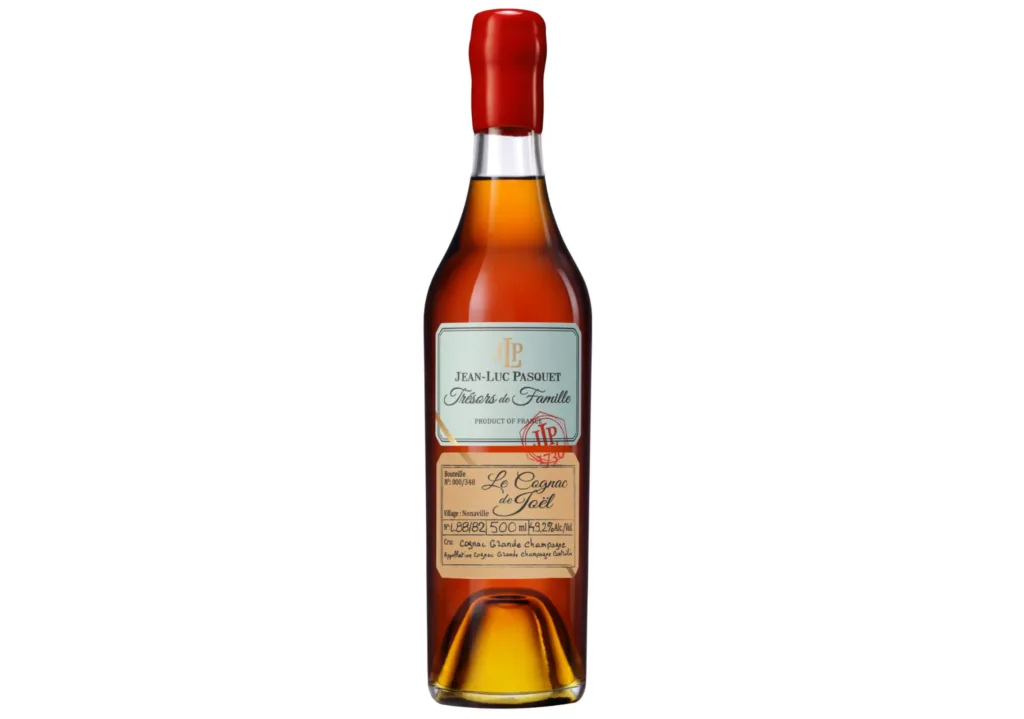
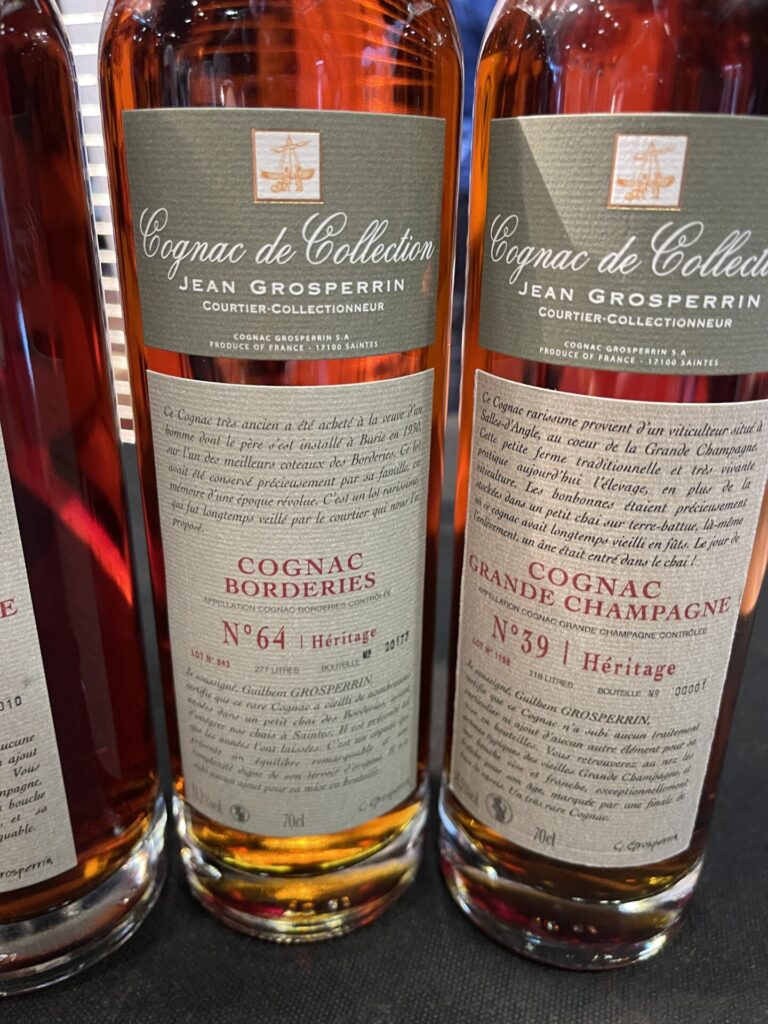
What I look for when reading a Cognac label.
By now, the process should look rather familiar.
I start with the information that is actually established.
Is it Cognac?
Does it carry a protected cru designation?
Is there an age category, a specific age claim or a documented vintage?
Does the producer identify the origin of the eaux-de-vie?
Is it a house blend, a single-estate bottling or a particular cask?
What is the bottling strength?
Are there explicit statements about reduction, colouring, sweetening or other adjustments?
And, crucially:
Which of those statements comes from the label, and which comes from information supplied elsewhere?
A producer’s technical sheet can tell us a great deal more than the bottle.
Direct confirmation from the bottler can resolve the ambiguities.
Historical documentation may establish the origin and age of an old parcel.
But retailer descriptions, enthusiast databases and assumptions based on naming conventions deserve a little more caution.
That doesn’t make them useless.
It simply means they are not all equivalent sources of evidence.
Too long, didn’t read
(Yes, Cognac gets a TL;DR too.)
Cognac is a protected geographical indication with defined production requirements.
Grande Champagne, Petite Champagne and the other crus describe geographical origin, not a legally guaranteed hierarchy of quality.
Fine Champagne means a blend of Grande Champagne and Petite Champagne eaux-de-vie, with at least half from Grande Champagne.
VS, VSOP, Napoléon, XO and XXO establish minimum ages for the youngest eau-de-vie. They don’t tell you the average age or the oldest component.
Hors d’Âge is not an unlimited-age category. It belongs to the XO minimum-age framework.
Vintage Cognac makes a specific claim about the production year, but a vintage and a bottling year don’t necessarily establish the number of years spent in oak.
Lot 75 may refer to 1975, but the word Lot alone is not proof of a vintage.
Single Estate and Single Cask may give useful provenance information, but neither automatically tells us everything about the production or maturation history.
Brut de fût and a high ABV are not interchangeable with a complete guarantee about every reduction operation.
And no additive declaration doesn’t prove that additives were used – or that they weren’t.
Conclusion: Cognac labels tell stories too.
I find Cognac labels particularly interesting because they often reveal a very different set of priorities from those of independent Scotch whisky bottlers.
A Scotch label may tell us the exact cask number, distillation date, wood type and outturn.
A Cognac label may emphasise its cru, house, age category or historical lot.
Neither approach is necessarily more transparent in every respect.
They simply give us different information.
And in both cases, the temptation is the same.
We see a familiar word and quietly add a whole collection of assumptions that the producer never actually stated.
Grande Champagne becomes a promise of superiority.
XO becomes a precise age.
Lot 75 becomes a verified 1975 vintage.
Brut de fût becomes proof that no water was ever added.
Single Estate becomes a complete account of production.
Sometimes those assumptions turn out to be correct.
Sometimes they don’t.
The interesting part is knowing the difference.
Because a Cognac label can tell you quite a lot.
You just need to be careful not to make it say more than it does.