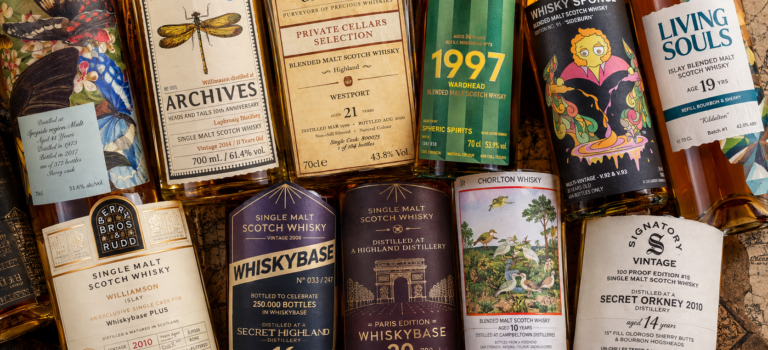
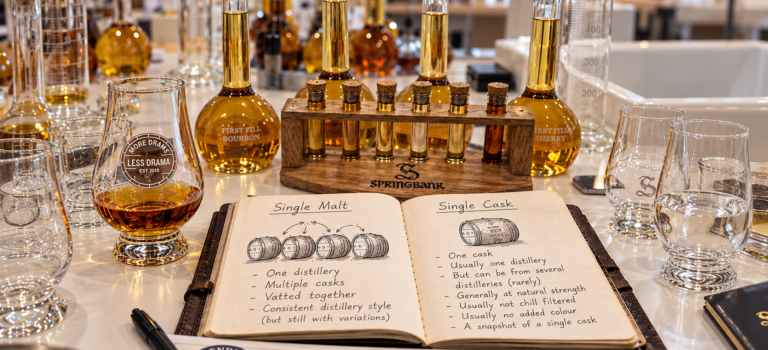
A single malt is a blend.

Single Malt Is a Blend. And Single Cask Isn’t Quite What You Think Either.

Single malt is supposed to be the opposite of blended whisky. Except that your favourite single malt may contain whisky from dozens – or hundreds – of different casks, vintages, ages and cask types, all combined to create the final bottle. Meanwhile, even single cask doesn’t necessarily mean quite what we instinctively assume. So what does single actually guarantee, and why is the whisky world so reluctant to admit that making a great single malt involves an awful lot of blending?

Read more →
Refill cask meaning

What Does ‘Refill Cask’ Actually Mean?

There are whisky labels that appear to tell you almost nothing, and others that seem extraordinarily precise. Refill sherry hogshead certainly belongs to the second category. Three words, and apparently we know the cask. We know its size – or at least its general format. We know something about what it held before. And we know that it has been used before.

Easy.

Except that we still don’t know what kind of oak it is. We don’t necessarily know what kind of sherry was involved, how long it held it, how long its previous whisky maturation lasted, whether this is its second Scotch fill or its fourth, whether it was rejuvenated somewhere along the way, or exactly how active the wood remains.

Suddenly, ‘refill sherry hogshead’ doesn’t look quite so precise. So what does refill actually tell us? And perhaps more importantly, what doesn’t it tell us?

Read more →
The Hidden Distillery: The Language of Undisclosed Whisky

The Hidden Distillery: The Language of Undisclosed Whisky

Independent bottlers are usually associated with transparency. They tell us the vintage, age, cask number, cask type, outturn, and strength, sometimes even the exact dates of distillation and bottling. In some cases, an independent bottling tells you considerably more about the whisky than an official bottle from the same distillery. And then, occasionally, it tells you almost everything except where the whisky was actually distilled.

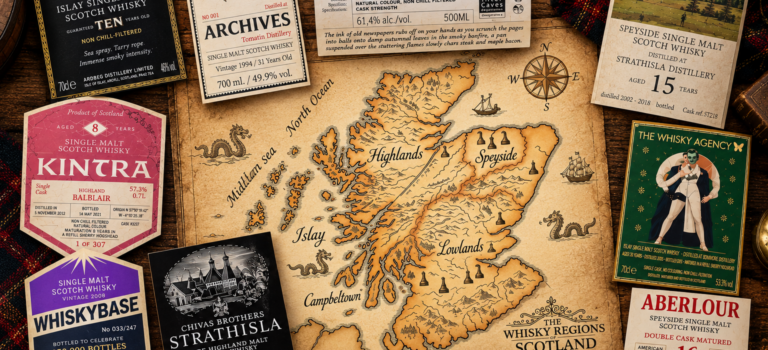
Secret Speyside. An Orkney Distillery. An Islay Single Malt. Secret Highland. Williamson. Westport. Wardhead. Burnside.

Sometimes the distillery is genuinely difficult to identify. Sometimes everybody in whisky seems to know what it is, while nobody involved in selling the bottle will actually write the name down. And sometimes what looks like an undisclosed single malt isn’t legally a single malt at all.

Welcome to one of the stranger languages of independent whisky.

Read more →
"They Don’t Make Whisky Like They Used To."

They Don’t Make Whisky Like They Used To. Literally.

‘They don’t make whisky like they used to.’ It’s the sort of thing whisky enthusiasts like to say after tasting an old bottling, usually followed by something about wax, tropical fruit or an elusive ‘old-school’ character. Taken literally, though, they’re right: whisky really isn’t made exactly as it used to be. Raw materials, production methods, casks and bottling practices have all evolved, while the liquid in those old bottles has sometimes spent another half-century sitting behind a cork or screw cap. So when an old bottling tastes noticeably different from its modern equivalent, what exactly are we tasting – and can we really know why?

Read more →
How to read a label

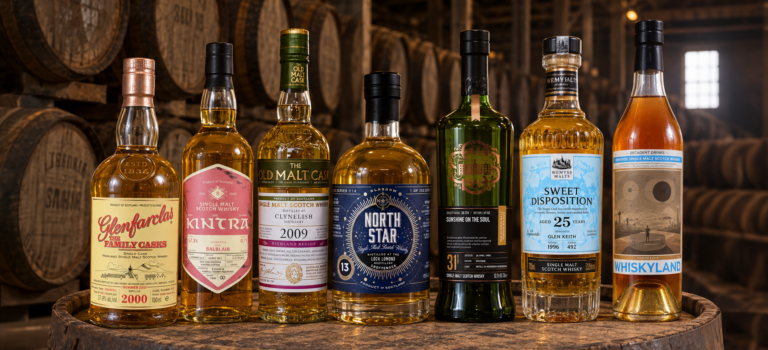
How to read a Scotch whisky bottle label

I spend a fair amount of time looking at labels before I pour anything. Independent bottlers in particular tend to put a lot of information on the bottle, and a little of it is required by law, some of it is voluntary, and some of it is simply the bottler’s own wording. The trouble is that all three look identical in small print.

So while the glass is temporarily empty, I thought I would go through some of the bottles I have reviewed and work out what each line on the label actually tells you – and what it does not.

For the legal side, I am relying mainly on the Scotch Whisky Regulations 2009, together with the Scotch Whisky Product Specification, where it adds relevant details. I will distinguish those rules from labelling conventions and voluntary information supplied by bottlers.

And, as we will eventually discover, this matters: something not specifically defined by the Scotch Whisky Regulations does not necessarily mean that anything goes.

Read more →