We’re flying at high altitude today with two very high-level secret Speyside whiskies bottled in 2017 by Antique Lions of Spirits (ALOS). Antique Lions of Spirits is an independent bottling collaboration based in Italy, but we’ll learn more about it below. In our glasses today are two very old Speyside single malts, distilled in 1973 and 1975, and both bottled in 2017.
Antique Lions of Spirits
Antique Lions of Spirits is an Italian independent bottling project that brought together Max Righi of Silver Seal, Diego Sandrin of Lion’s Whisky, and Jens Drewitz of Sansibar. It started in 2016 and is best known for small, collectible single-cask releases with series names like The Birds, The Butterflies, and The Savannah. However, this project seems to have been short-lived, as their last bottling was released in 2018.
What gave the project its appeal was the old school, slightly romantic feel of the bottlings. The label art deliberately nodded to the classic wildlife-themed Italian bottlings of the 1980s and 1990s, especially the Moon Import era, so the whole thing feels like a tribute to a very specific whisky culture rather than just another indie label.
In practice, that means the whiskies tend to be limited, often mature, and pitched to collectors as much as drinkers. The prices were high, but the project had a strong identity and a clear aesthetic, which is part of why it stood out among independent bottlers.
The Problem Of Rare Whisky Samples
There is a particular kind of whisky problem that almost nobody warns you about when you start building a stash of samples: eventually, the bottles are not the issue anymore; the samples are. They arrive in dribs and drabs, through trades, friends, splits, club pours, auction lots, retailer bonuses, specialist online shops, the occasional generous handover at a festival, and before long you have a small (or not that small) archive of things you really ought to taste. Not just taste, actually. Write about. Think about. Properly sit with.
That last part is where the delay starts.
Because the rarer the sample, the easier it becomes to convince yourself it deserves a “proper” moment. Not tonight, because tonight is too tired and the glass would not be respected enough. Not tomorrow, because tomorrow is for something more straightforward. Not this week, because if you are going to open a 1970s oddity, a cult independent bottling, or some expensive old sherry cask relic, then surely you need the right mood, the right notes, the right light, the right silence, the right appetite, and the right excuses. And if you write about whisky for a living, or semi-seriously, or with enough self-imposed responsibility to make it feel like work, the excuse becomes even stronger. You tell yourself you need to wait until you can give the whisky its due.
Which is, of course, a wonderful way to let excellent drams sit there while life moves on.
Samples are especially dangerous because they seem immune to urgency. A bottle shouts at you from the shelf. A sample, by contrast, behaves like a promise. It can be filed away. It can be rearranged. It can be mentally upgraded from “to try” to “to cherish later”, which is really just another way of postponing a decision. Rare whisky gets treated like a future event rather than a present drink. And that future keeps drifting away.
The odd thing is that the more valuable or unusual the whisky is, the more pressure it carries to become a piece of content. If it is a standard release, you can pour it, enjoy it, and move on. If it is scarce, discontinued, or expensive, then there is this extra layer of obligation: take notes, remember the details, compare it to other releases, find the context, build the story, and make the tasting matter. The whisky becomes something to cover, not just something to drink. That instinct is understandable, but it is also a trap. A sample cannot become a review if it never leaves the drawer.
And the drawer fills up. And becomes two drawers. And twelve drawers. That is the other problem. Once you have enough samples, the whole collection starts to look like an orderly reserve of future pleasure. But future pleasure is not the same thing as an actual experience. There are only so many opportunities in a month when the palate is ready, the head is clear, the evening is quiet, and the whisky in question will not be drowned out by distraction or fatigue. In theory, every sample has a place. In practice, there are far fewer perfect openings than there are bottles waiting to be opened. So the queue grows, and the queue quietly becomes a mausoleum.
That is why, every now and then, you have to force the issue. Not in a joyless, dutiful way, but deliberately. Rip the seal. Pour the sample. Stop negotiating with yourself. Rare whiskies do not improve by being endlessly admired from a distance. Samples, especially, are vulnerable to being forgotten, and forgotten whisky is a peculiar kind of loss: it is not dramatic, just wasteful. The opportunity was there, and then it was gone. No grand tragedy, just a missed evening and an evaporated chance to encounter something remarkable.
There is also a strange honesty in opening a rare sample before you feel fully “ready”. It cuts through the fantasy that the perfect occasion will arrive on its own. Most whisky is not drunk under ideal circumstances. Real life is messy, and that is fine. The point is not to build a museum of unopened promises. The point is to drink, to notice, to remember, and to put words to what is in the glass while it still matters. Waiting too long can make the whole exercise feel more precious, but not necessarily more meaningful.
And perhaps that is the real discipline here: learning to respect rare whisky enough to actually drink it. Not hoard it, not curate it indefinitely, not turn every sample into a future project. Open it. Take notes. Write the piece. Let the whisky be what it is, rather than what it might become in some imaginary better moment. Because those moments rarely arrive in the exact form we expect, and some of the best drams in a collection are the ones that were opened just in time rather than too late.
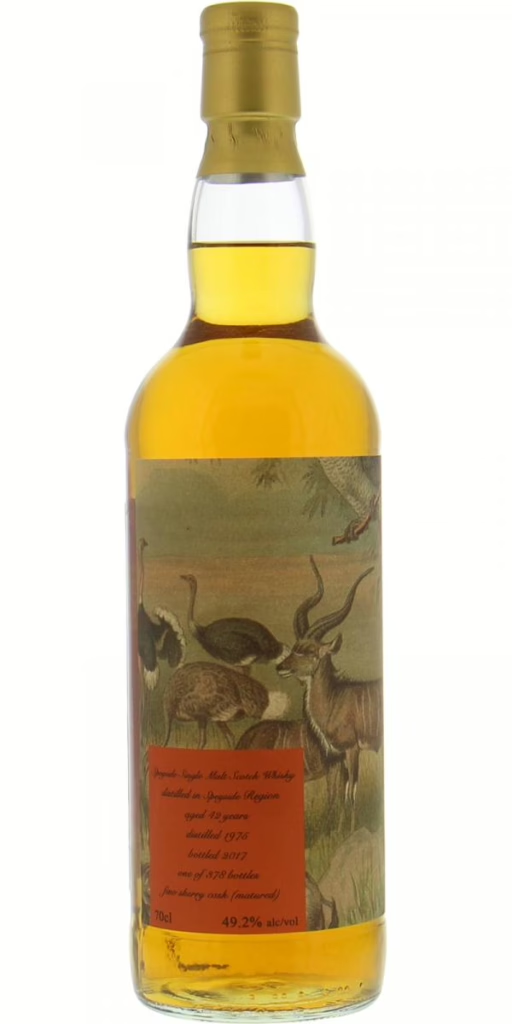
Speyside Region Malt 1975 Antique Lions Of Spirits (2017) Review
This 42‑year‑old Speyside “region” single malt was distilled in 1975 and matured for 42 years in a fino sherry cask before being bottled in 2017 by Antique Lions of Spirits at 49.2% ABV; with only 378 bottles released. The whisky is part of ALOS’s “Savannah Series”. Initially released at €495, it seems you can still get a bottle from Lions Whisky for about €800 a bottle.
Colour:
Deep copper.
Nose:
Neat: The initial impression is one of tropical fruit galore. It opens with an intense, waxy bouquet of melon, guava, dragon fruit and mango. There is a distinct old-school waxiness reminiscent of honeycomb and beeswax. As it breathes, it reveals deeper layers of tangerine zest, dried pineapple, and a floral touch of elderberry. Subtle savoury notes of propolis, candle wax, and dried herbs, providing a complex, herbal structure.
With water: The honeyed notes become more dominant, and a surprising fig filled biscuit aroma emerges. The fruit profile shifts toward bright citrus, with lemons and limes becoming more pronounced against the backdrop of polished oak.
Palate:
Neat: The mouthfeel is remarkably oily and thick, delivering a punchy “oomph” that belies its age. It starts with a burst of dried pears, tropical fruits and golden raisins, followed by a warming wave of Szechuan pepper and ginger spice. The Fino influence is clear—it’s less about the dark fruits of Oloroso and more about bitter almonds, waxy oranges, and herbal teas. A light, resinous oak presence provides a structural grip without being overly tannic.
With water: The texture becomes silkier. The citrus notes retaliate, bringing a zesty freshness that cuts through the wax. The spice settles into a gentle cinnamon and vanilla hum, and the tropical fruits (pineapple and passionfruit) become juicier and more nectary.
Finish:
A very long, evolving finish. It lingers on honeyed oranges, cidery notes, and a touch of walnut bitterness. The “skanky” (in the best sense) old-malt character remains, leaving a trail of waxy resins and dried herbs.
Comments:
I usually don’t try with a few drops of water under 50% ABV, but for this whisky I had to try, and boy does this very old Speyside is delicious and benefits from reduction as it evolves without losing interest. This Speyside shows that when a good cask is involved, time can do marvels on a spirit. But we knew that with Cognac, for instance, right?
Rating: 9/10
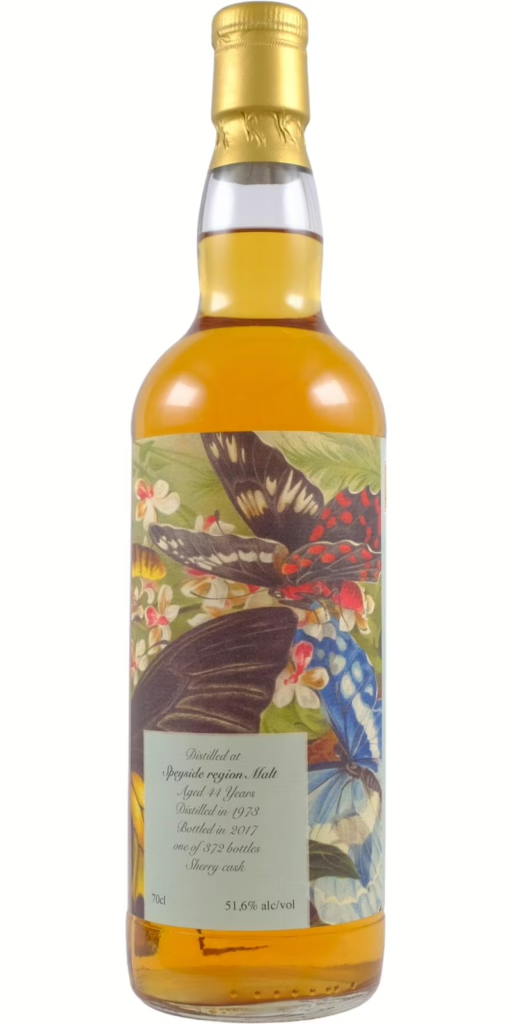
Speyside Region Malt 1973 Antique Lions of Spirits (2017) Review
This undisclosed Speyside single malt was distilled in 1973, matured in sherry cask, and bottled by Antique Lions of Spirits in 2017 in their Butterflies series. After 44 years of maturation, the cask still gave a yield of 372 bottles filled at 51.6% ABV. Still available from Lions Whisky for €1,150 a bottle.
Colour:
Amontillado sherry.
Nose:
Neat: The nose starts beautifully soft and warm, instantly transporting you to an old-school dunnage warehouse. There is an immediate, luscious wave of old beehive—beeswax, propolis, herbal honey, and dense flower pollen. Give it a minute to breathe, and the tropical fruits start to put on a show: guava, ripe papaya, banana bread, and orange cubes, all balanced by a fine thread of antique sandalwood, vanilla custard, and camomile tea. It feels incredibly layered, heavy, and antique.
With water: A few drops of water shift the scenery. The tropical brightness steps back slightly, making room for a deeper, darker, and more concentrated profile. Think dark, jammy dried figs, heavy fruit syrups, and rich leather.
Palate:
Neat: The arrival is surprisingly vibrant and punchy for a 44-year-old—this hasn’t been tired out by the wood at all. The mouthfeel is wonderfully oily and waxy. It opens with juicy crisp apples, pears, and sharp pink grapefruit juice, before the sherry cask asserts itself with concentrated raisins, cooked quinces, and a touch of dark chocolate. The oak structure is elegant but present, adding a spicy kick of cinnamon, aniseed, and a faint prickle of Szechuan pepper.
With water: Dilution brings a lovely citrus kick. The grapefruits and oranges drive forward, brightening up the mid-palate. The texture stays delightfully oily, but it transitions into a greener landscape with notes of mint leaves, herbal tea, and a subtle, dark-chocolate bitterness that keeps the fruit in check.
Finish:
The finish is long, comforting, and exceptionally well balanced. It lingers on warm, honeyed orange peel, passion fruit, and sweet fudge, leaving a drying oak spice and a faint trace of cocoa on the tail end.
Comments:
It’s hard to imagine you could have something even better in the glass after the 1975 in the same evening. This 1973 elevates things even higher, with some similarities with the 1975, but with additional antique notes (pun not intended) showing a profile clearly not from these times. But despite its already respectable age, this Speyside 1973 shows great freshness and life, crisp fruits and noble sherry, I just don’t have enough superlatives for this (I might almost hope never to try whiskies said to be even greater than this one, or I might have to rate things 10 or 11 out of 10 at this point!).
Rating: 9.5/10
Many, many thanks, Matthias, for sharing these.