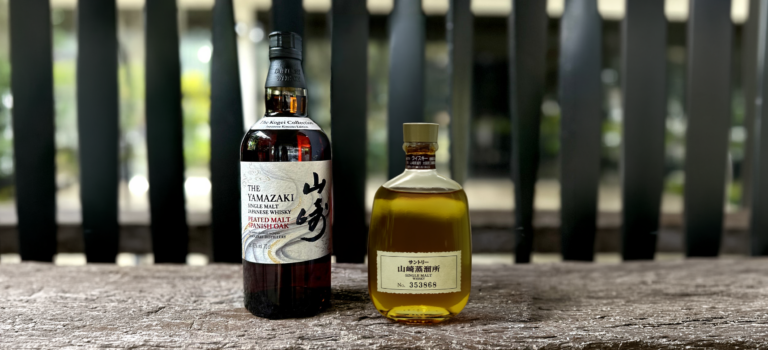
Yamazaki Distillery Exclusive and Peated Malt Spanish Oak Kogei Edition

Yamazaki Distillery Exclusive & Kogei Edition

It has been a while since I last reviewed Yamazaki, so today I’m adding two more expressions to More Drams. First is a Yamazaki Distillery Exclusive single malt that I bought at the distillery in 2018, followed by Yamazaki Peated Malt Spanish Oak from the Kogei Collection. The latter was initially launched for global travel retail.

Not long ago, obtaining both would have required a trip to Japan: a visit to Yamazaki Distillery for the Distillery Exclusive, assuming you were lucky enough to find one, as they were flying off the shelves because of their low price, then a stop at the airport for the Kogei release in a duty-free shop. Things have changed since then. This Distillery Exclusive is no longer available, while the Kogei Collection has become far easier to find through travel-retail and specialist channels, meaning there is at least one less reason to make a whisky-focused flight.

Read more
Four Macallan 12 and Speymalt 20

Four Macallan 12 yo and a 20 yo Speymalt

Macallan has so far been something of a blind spot on More Drams Less Drama. We have only reviewed a pair of secret Macallans – both bottled by Le Gus’t – and they were, frankly, stunning. This time, however, there is no need for concealment: we are heading directly into one of Speyside’s most recognisable names, through four versions of the Macallan 12-Year-Old Sherry Oak Cask and a mature 2000 Speymalt from Gordon & MacPhail.

The four 12-year-olds should make for a particularly useful exercise in comparison. A whisky with such a fixed identity on paper can still evolve through changing cask sourcing, batch composition, bottling eras and the inevitable small adjustments of a long-lived official range. Adding Gordon & MacPhail’s 20-year-old Speymalt 2000 offers a different perspective altogether: a longer-aged, independently bottled Macallan, selected and presented beyond the official Sherry Oak framework. Together, they should tell us something about consistency, evolution, and the many ways Macallan’s sherried spirit can be interpreted.

Read more
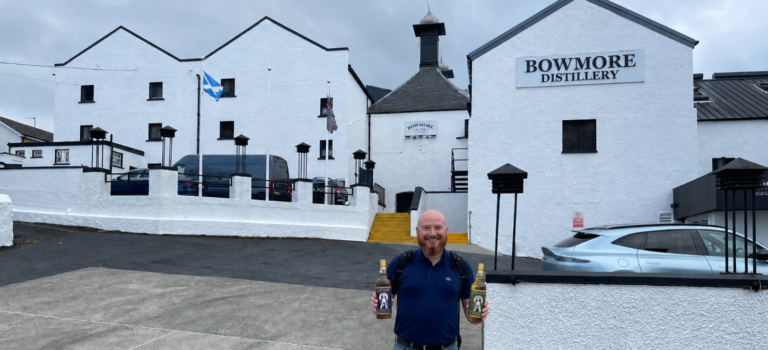
Two Bowmore 2005 The Whisky Agency

Two Bowmore 2005 The Whisky Agency

Back in February we were stunned by a few magnificent official Bowmore, so this time I’m turning to two independent bottlings. Rather fittingly, they are sister casks released by the same bottler and retailer, The Whisky Agency: both were distilled in 2005, matured in the same type of cask and bottled in 2026. The question, then, is whether these two Bowmore prove closely aligned in character or reveal meaningful differences between casks.

Read more
Four Springbank 15-year-old

4 Springbank 15-year-old and Batch Variation

After our Irish detour, we are back in Scotland, and more specifically in one of the country’s most obsessively followed distilleries: Springbank. This tasting brings together four 15-year-olds – an older bottle from 2006 and the 2024, 2025 and 2026 releases – for a simple but revealing exercise in batch variation, with the aim of seeing how much the same age statement can shift over time while still remaining recognisably Springbank.

That kind of comparison is exactly where Springbank tends to reward attention. Even when the age statement stays fixed, the cask mix, batch composition and bottling conditions can subtly reshape the whisky from one release to the next, so lining up an older bottling against three recent ones should tell us a lot about continuity and drift, and perhaps even about what we really mean when we say a whisky is ‘the same’ from year to year. When the Local Barley has age, cask and farm variation, the Springbank 15-year-old shows stability.

Read more
Redbreast Cuatro Barriles & 21-year-old

Redbreast 21-year-old and Cuatro Barriles

After Monday’s detour into old-school Jameson — with the 1980s 12-year-old reminding us of Midleton’s earlier output (and the even older 1940s version still tied to Bow Street) — we stay firmly within the Midleton universe, but shift gears toward one of its most celebrated single pot still brands: Redbreast.

This time, the line-up pairs two very different expressions of the style: the Redbreast Cuatro Barriles, with its cask-driven, modern experimental edge, and the 21-year-old, long considered one of the benchmarks for mature Irish pot still whiskey. Together, they offer a useful contrast between innovation and maturity within the same distillery framework, and a chance to see how far the Redbreast profile can stretch — from active wood influence to the layered complexity that only extended ageing can bring.

Read more
Jameson 12-year-old 1980s and 1940s

My 3000th Dram With Jameson 12 yo: 1940s vs 1980s

Another milestone already! After recently reaching 1000 spirits reviewed on More Drams since its creation, I’ve now hit 3000 different whiskies tasted, as far as I can track and remember, thanks to Brian ‘Malt Musings’ excellent whisky spreadsheet. As with any major milestone, the question was what to pour in celebration. I considered some older Balblairs, like the 1966 38-year-old and a 40-year-old bottled by Specialist Drinks, or one of several silent distilleries, such as Lochside, Glen Albyn, Glen Mhor, Dallas Dhu, Pittyvaich, Brora or pre-reopening Port Ellen, but I decided to go in a different direction: whisky from another era. That left plenty of options too, and for this occasion I chose a Jameson Irish whiskey bottled in the late 1930s or early 1940s, even older than the pre-WWII Ballantine’s 30-year-old we tried two years ago. It also needed a sparring partner, and since I recently picked up a few dozen old minis from the 1970s to the 2000s, a Jameson 12-year-old in the bunch gave me the comparison point I needed.

Read more